Best Bubble Alternatives in 2026: 8 Options Matched to Why You're Leaving
November 12, 2026 · 14 min read
Leaving Bubble over workload-unit pricing, the learning curve, performance, mobile or lock-in? Here are 8 Bubble.io alternatives, what each costs and which problem each one solves.
The short answer
Bubble has been the default way to build a web app without code for more than a decade, and with enough patience you can build almost anything on it. People who search for a Bubble alternative are rarely unhappy with what it can do. They are unhappy with what it costs to run, how long it takes to learn, how their app performs as it grows, or the fact that the app can never leave Bubble's runtime.
Each of those reasons points to a different replacement, so this guide matches tools to reasons instead of ranking them on one scale. AI app builders remove the learning curve. WeWeb and FlutterFlow give you more control and real code. Softr and Glide are faster for portals and internal tools on data you already have. Adalo and FlutterFlow focus on native mobile. Lovable and Replit give you a codebase you own.
Our first pick is Gappsy. Gappsy is our own product, so weigh this pick accordingly — we've listed its limits too. Prices below come from Gappsy's listings and, where noted, from each vendor's pricing page as of November 2026.
Quick picks by reason for leaving Bubble
• Learning curve, and you need a customer-facing app with payments: Gappsy
• Front-end control and code you can take with you: WeWeb
• Native iOS and Android with exportable code: FlutterFlow
• Native mobile without code, with flat pricing: Adalo
• A codebase from a prompt: Lovable or Replit
• Portals and internal tools on Airtable, Sheets or HubSpot: Softr or Glide
Why people look for a Bubble alternative
Workload-unit pricing is hard to predict. Bubble meters the server work your app does in workload units (WU). Each plan includes a monthly allowance; beyond it you buy a higher workload tier or pay overages per 1,000 units. Few founders can estimate what a search page or a busy launch week will consume until the bill arrives. As of November 2026, Bubble's web-only Starter plan is $32 a month billed annually ($39 monthly), Growth is $119 and Team is $349 a month billed annually.
The learning curve. Bubble is full-stack, so you design a data model, privacy rules, responsive layouts and workflows at the same time. For a founder who wants to test an idea this month, weeks of learning before the first paying customer is a high price.
Performance at scale. Large or data-heavy Bubble apps often need careful optimization, and that work shows up in both your time and your workload bill. Teams that hit this wall tend to move to tools that run on a backend they control, such as Supabase or Xano.
Mobile is now a separate bill. Bubble builds native iOS and Android apps, but a live mobile app needs a Mobile or Web + Mobile plan. As of November 2026, Web + Mobile Starter is $59 a month billed annually, against $32 for web only.
Vendor lock-in. Bubble apps run on Bubble's proprietary runtime. You can export your data, but not your pages and workflows as code. If owning the code matters to you, investors or a future acquirer, that alone can decide the question. Our Bubble review covers what the platform does well.
1. Gappsy – Best for launching a customer-facing app with payments, fast
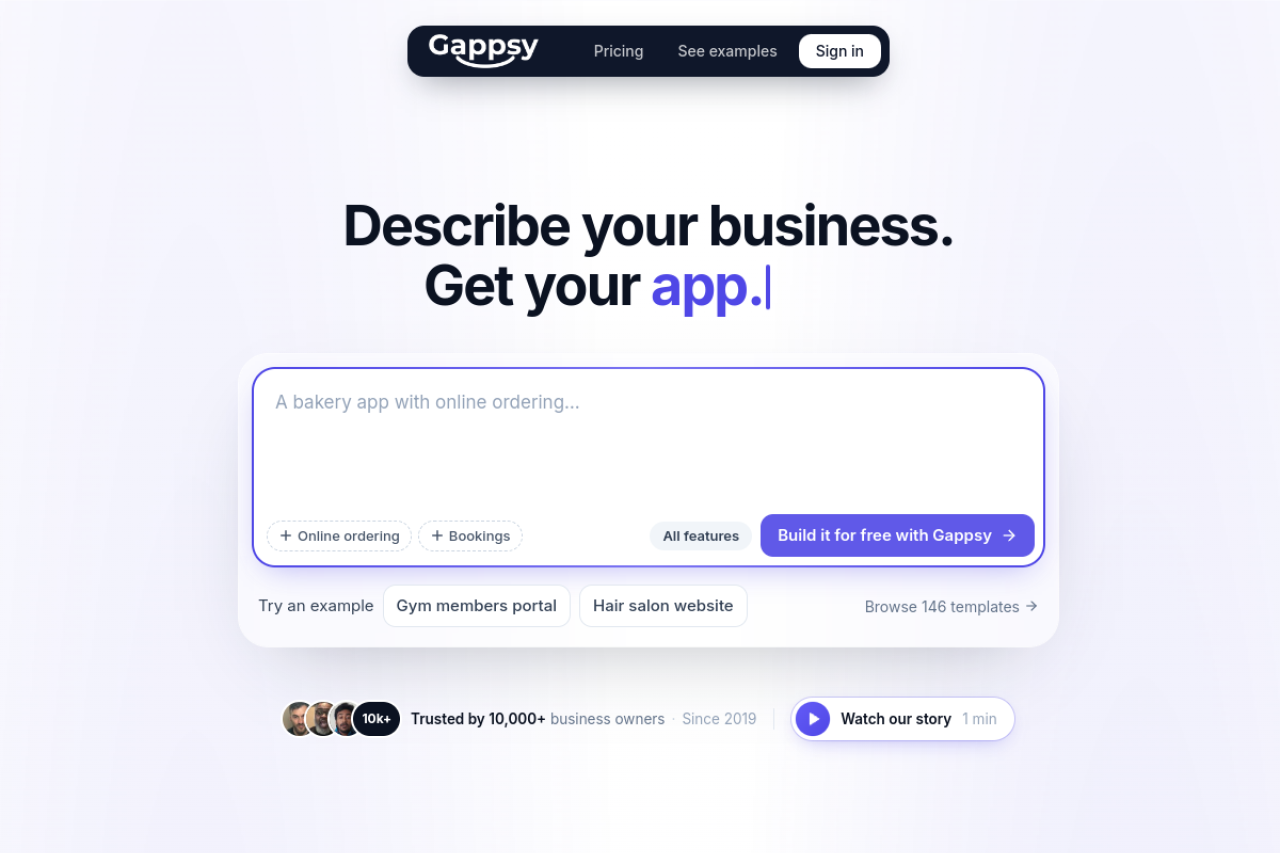
Disclosure: Gappsy is our own product, so weigh this pick accordingly — we've listed its limits too. Gappsy is an AI app builder. You describe your business or idea in a sentence or two and it builds a live app, a website on the same content and the tools you asked for. Where Bubble has you place every element, define data types and wire workflows, Gappsy starts from a working product that you change by typing an instruction such as "add online booking" or by tapping on the app to edit texts, photos and prices.
The features that take longest to build in Bubble are already there. Gappsy has 56 built-in feature blocks, including ordering, bookings, memberships with recurring billing, gift cards, events and tickets. Customers pay you through your own Stripe account, one-time or by subscription, and local businesses get an Apple and Google Wallet loyalty card and push notifications. Hosting, database and customer accounts are included. On Pro you can publish to the App Store and Google Play yourself as a packaged web app, with your own developer accounts. You can also start from ready-made software, rebrand it and sell it as SaaS, then list it on Gappsy's directory of 7,000+ software profiles where buyers already compare tools.
Pricing: Free is $0 for one app on yourname.gappsy.co, 300 visitors and 10 AI changes a month, a 5% payment fee and a "Made with Gappsy" label. Pro is $19 a month billed yearly or $29 monthly, with your own domain, a 1% fee, 3,000 visitors and 50 AI changes. Business is $55 a month billed yearly or $79 monthly, with 5 apps, 150,000 visitors and a 0% fee. The trade-off: if your product depends on a custom data model or complex conditional workflows, Bubble or WeWeb fits better, and there is no code export. See Bubble vs Gappsy for a side-by-side.
Pros
• Free plan goes live with every feature, including payments and push notifications
• Payments, bookings, memberships, gift cards and tickets built in, paid into your own Stripe account
• No data model or workflows to design; change the app by typing or tapping
• Hosting, database and accounts included, with no workload-style usage meter
Cons
• Less freeform than Bubble's visual editor and workflows
• No code export, so it does not solve lock-in
• Newer product with a smaller community than Bubble
• Free plan is tight (300 visitors, 10 AI changes a month, 5% payment fee)
Best for: founders and small businesses who want a booking, ordering, membership or SaaS-style app live with payments in days, not after learning Bubble. Try Gappsy free.

Describe your business, get a live app, website and tools with payments built in.
2. WeWeb – Best for front-end control without lock-in
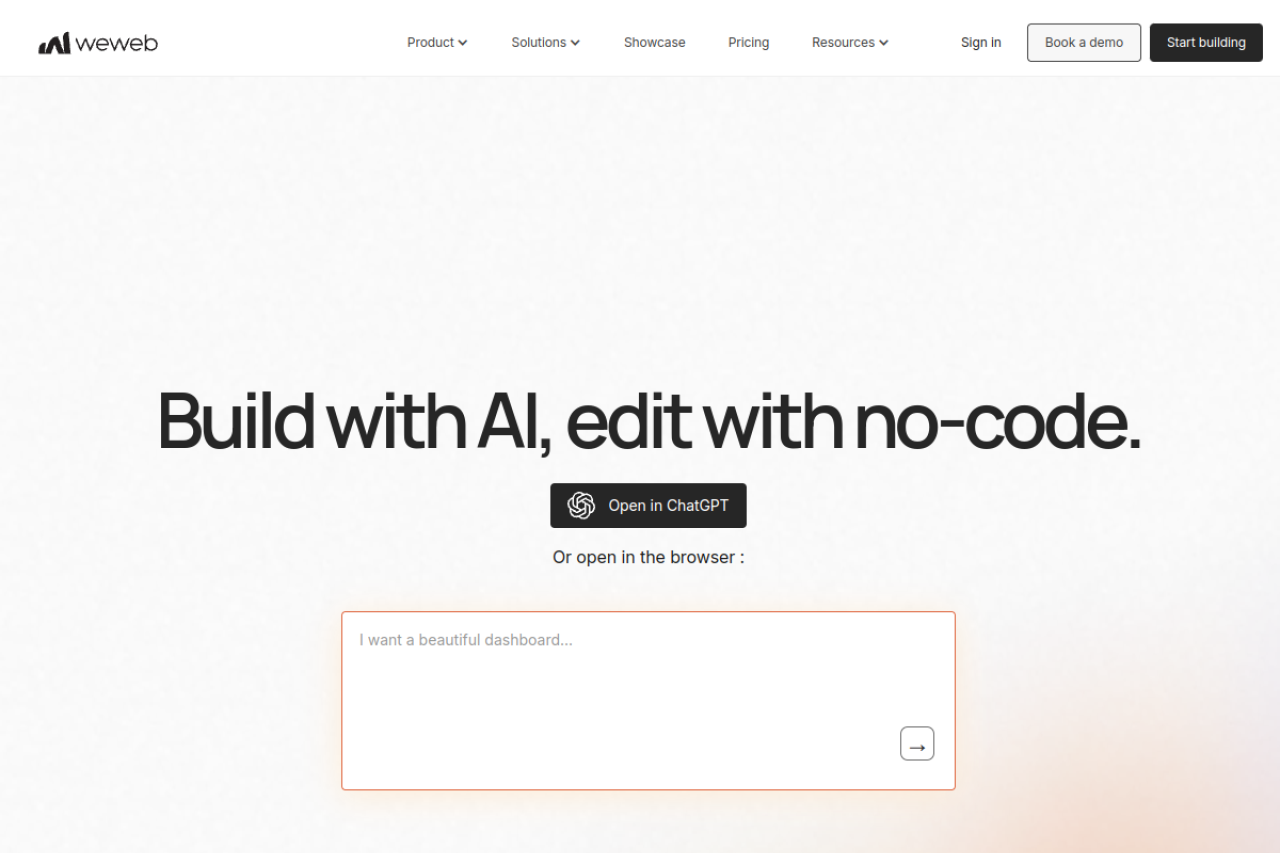
WeWeb is the alternative that feels most like Bubble to work in: a visual canvas for responsive web apps, visual workflows, AI-generated components and Figma import. The difference is architectural. WeWeb is a front end that connects to any backend, whether Supabase, Xano, REST or GraphQL APIs, or its own WeWeb Tables, a Postgres database with a spreadsheet-style interface. From the Essential plan up you can export the code, self-host it and sync it with GitHub, which is why teams leaving Bubble over performance or lock-in often land here.
As of November 2026, WeWeb has a Free plan on a WeWeb subdomain, Essential at $20 a month and Pro at $50 per developer a month, both billed annually. Hosting on WeWeb Cloud is billed per live app from $13 a month, or you self-host the exported code. Expect a learning curve close to Bubble's.
Pros
• Code export, self-hosting and GitHub sync from Essential
• Works with Supabase, Xano, any API or its own Postgres tables
• Fine control over the front end
Cons
• Learning curve similar to Bubble
• Two-part bill: workspace plan plus per-app hosting
• Smaller ecosystem than Bubble
Best for: technical founders and agencies who like Bubble's visual approach but want to own the backend and the code.
AI-assisted no-code and low-code platform for building production-ready web apps and internal tools on top of any backend.
3. FlutterFlow – Best for native mobile apps with exportable code
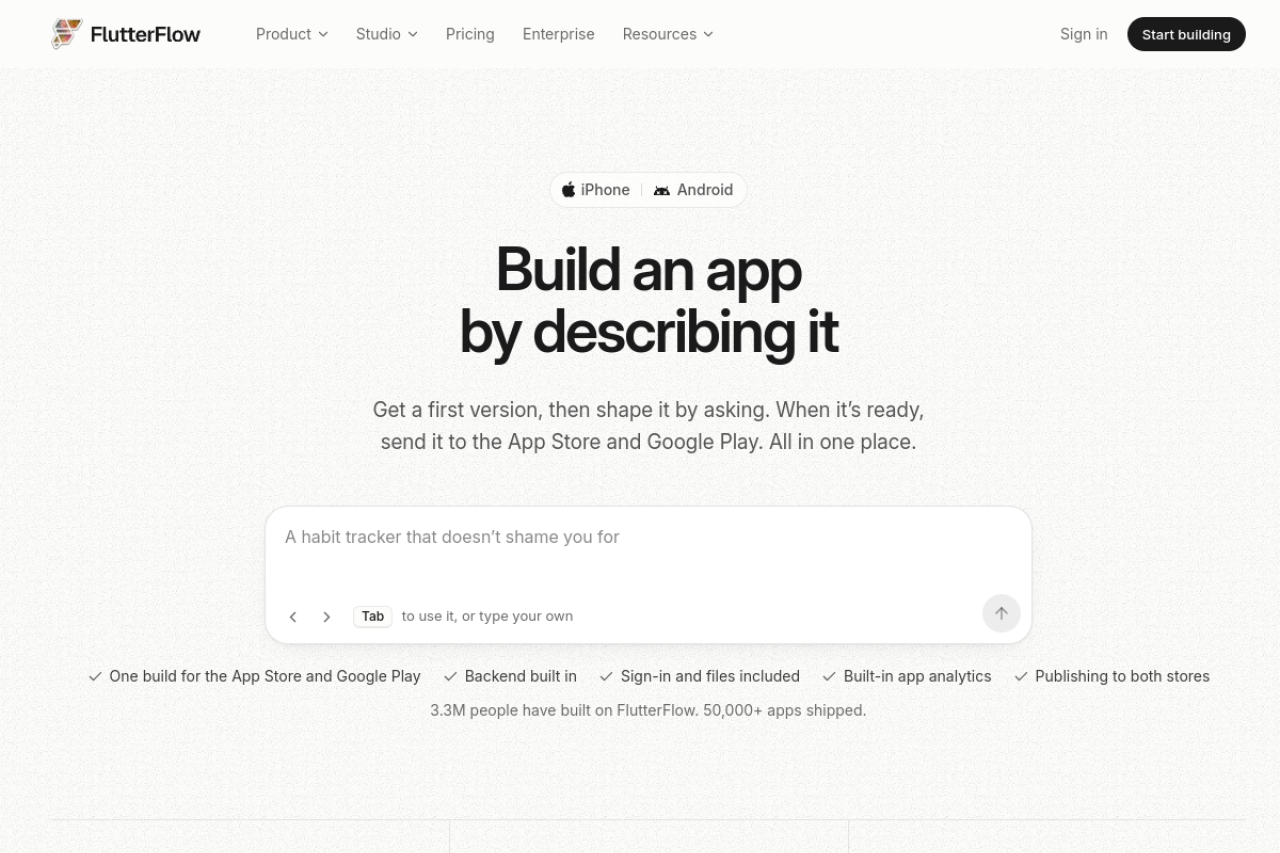
FlutterFlow is a drag-and-drop builder that generates real Flutter code, so one project ships to iOS, Android, web and desktop. (As of November 2026 the visual builder is branded FlutterFlow Studio.) You build logic in a visual action editor and connect Firebase, Supabase or any REST API. Bubble's native apps still run on Bubble; FlutterFlow's paid plans let you download the source code and deploy to the App Store and Google Play in one step, which matters if a development team may take over later.
As of November 2026: Free (two projects), Basic at $39 a month or $29 billed yearly, Pro at $80 or $60, and Max at $150 or $113. You bring your own backend, and complex logic goes faster if someone knows Dart.
Pros
• Downloadable Flutter code
• One project for iOS, Android, web and desktop
• One-click store deployment on paid plans
Cons
• Backend is a separate service
• Custom logic often needs Dart
• Seat-based pricing adds up for teams
Best for: mobile-first startups that want native apps now and full code ownership later.
FlutterFlow is a visual, drag-and-drop app builder that generates real Flutter code for iOS, Android, web, and desktop, with Firebase,…
4. Lovable – Best for getting a real codebase from a prompt
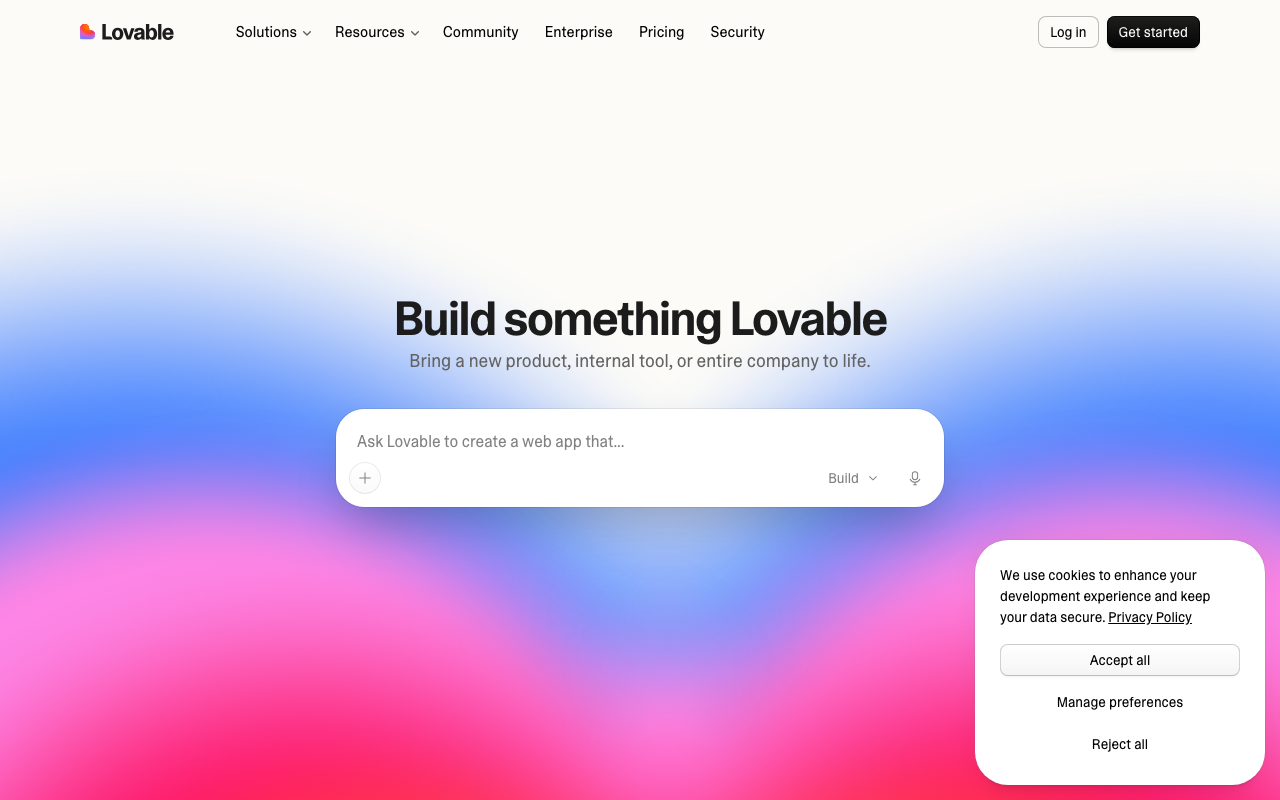
Lovable replaces Bubble's canvas with a chat. You describe a web app and it generates editable full-stack code, with Supabase for authentication, database and storage, then deploys it to your domain. There is no visual workflow language to learn, and the result is a codebase rather than an app tied to one runtime. Someone still has to review that code for anything security-sensitive, and credits cover building, Lovable Cloud hosting and in-app AI features, which is a different usage meter rather than an escape from one. See Gappsy vs Lovable and Lovable vs Bolt.new.
The Free plan includes 5 build credits a day, up to 30 a month (Lovable's pricing page, November 2026). Our listing shows Pro at $25 a month ($21 billed annually) and Business at $50 ($42 billed annually).
Pros
• Real, editable code instead of a locked app
• Supabase backend out of the box
• Fast prompt-to-deployed-app loop
Cons
• Credit-based pricing is hard to predict
• Generated code needs review
• Web apps only
Best for: founders comfortable reviewing code who want an MVP fast and a codebase they own.
AI-powered app builder that generates full-stack web applications from natural language prompts, formerly known as GPT Engineer.
5. Softr – Best for client portals and internal tools on existing data
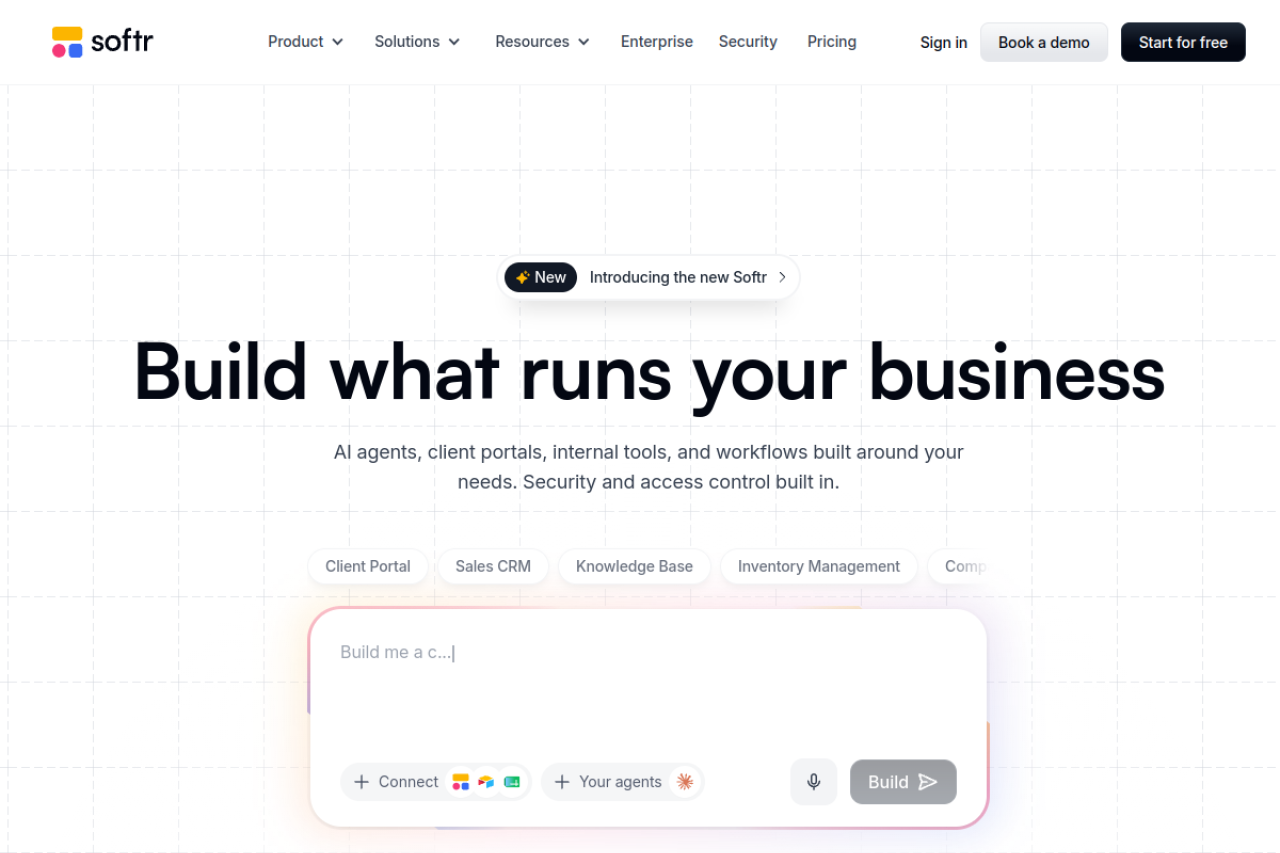
Softr builds portals and internal tools on Airtable, Google Sheets, HubSpot, Notion, SQL or its own Softr Databases, from ready-made blocks or a prompt, with login, permissions, workflows and Stripe payments built in. Many Bubble apps are really a database with a login screen in front; for those, Softr is much faster, at the cost of Bubble's design freedom. Compare Bubble vs Softr, or Gappsy vs Softr if the portal is customer-facing and needs bookings or memberships.
As of November 2026, Softr lists Free (up to 5 app users and 5,000 records), Basic at $19 a month, Pro at $99 and Business at $329. Plans are sized by app users, so a public app with many logins climbs tiers quickly. Installable PWA and push notifications are on Business.
Pros
• Fast apps on top of Airtable, Sheets, HubSpot or SQL
• Login, permissions and Stripe payments built in
• Far shorter learning curve than Bubble
Cons
• Pricing scales with app users
• Complex logic needs code or workarounds
• Speed depends on the connected data source
Best for: operations teams and agencies building client portals and internal tools. Noloco is a close alternative with finer record- and field-level permissions and white-label portals.
Softr is a no-code and AI-native platform for building business apps, client portals, and internal tools directly from data in Airtable,…
6. Adalo – Best for native mobile apps without code
Adalo builds database-driven native iOS and Android apps and web apps as one version on a single canvas, with a hosted database or Airtable, Google Sheets or Xano, an AI assistant called Ada, and store publishing on paid plans. It answers two Bubble complaints at once: it is simpler to learn, and it advertises flat pricing with no usage-based charges. For heavy back-end logic, Bubble's workflow engine goes further. See Adalo vs Bubble.
As of November 2026: Free (unlimited test apps, 500 records per app), Builder at $65 a month or $52 billed yearly with 2 published apps, and Business at $200 a month or $160 billed yearly with 5 published apps.
Pros
• No-code path to App Store and Google Play
• Flat pricing, no usage charges
• Built-in database plus external sources
Cons
• Publishing requires a paid plan
• Free plan record limits are tight
• Less depth for complex logic than Bubble
Best for: non-technical founders whose product is a phone app first.
Adalo is a no-code platform for designing and publishing native iOS, Android, and web apps using a drag-and-drop visual builder, a…
7. Glide – Best for turning spreadsheets into team apps
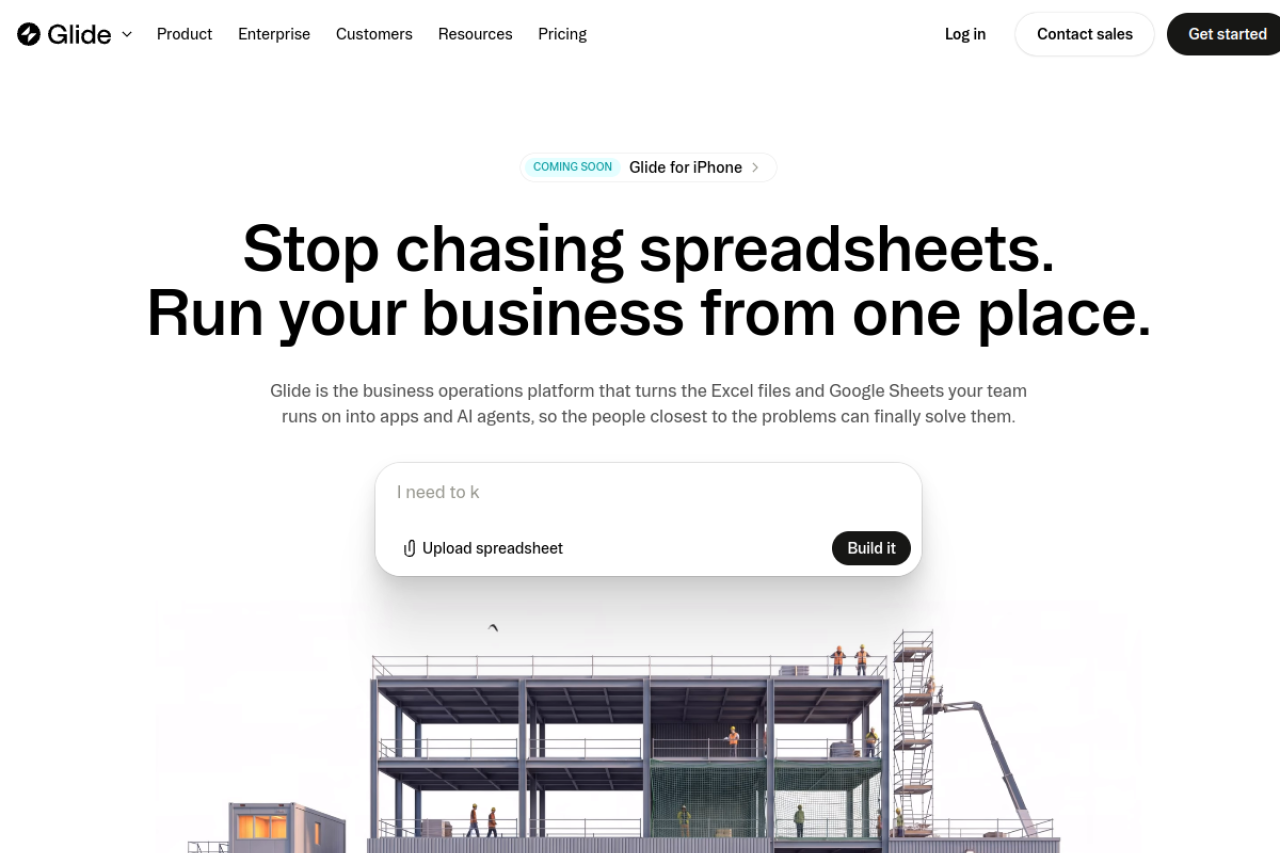
Glide turns a spreadsheet, a prompt or a file into a mobile-friendly business app. As of November 2026 its current platform is GlideOS, separate from the original Glide Classic, with its own pricing and no migration tool between them. It is narrower than Bubble and much faster for one job: giving a team a clean app over shared data, with forms, charts, workflows and AI that pulls structured data from text, images or audio. It is not built for public consumer products.
GlideOS pricing as of November 2026: Free with limited credits, Basic at $25 a month (2 published apps), Plus at $50 (5 published apps, public apps) and Pro at $125 (from 5 members, unlimited apps). Credits meter the platform's AI work.
Pros
• Strong on-ramp from spreadsheets
• Mobile-friendly apps without native development
• AI data extraction built in
Cons
• GlideOS and Classic are separate, with no migration
• Credit-based pricing
• Not for custom consumer products
Best for: small teams replacing spreadsheet workflows with an internal app.
Glide is a no-code platform that turns spreadsheets and other data sources into custom web and mobile business apps, with AI tools to…
8. Replit – Best for full code ownership with hosting included
Replit is a browser-based development platform whose AI agent plans, writes, tests and deploys apps from plain-language prompts. Like Bubble, it keeps database, hosting and deployment in one place. Unlike Bubble, you end up with ordinary source code you can move anywhere, which makes it the natural next step for apps that have outgrown no-code. You will review the agent's code and database changes; Pro adds 28-day database rollbacks for that reason. See Gappsy vs Replit and Lovable vs Replit.
As of November 2026, Core is $20 a month or $18 billed annually, and Pro is $100 or $90 billed annually. Heavier agent use is billed on top of included credits, so real costs can exceed the subscription.
Pros
• Real code you own
• Database, hosting and deployment built in
• AI agent builds and deploys from prompts
Cons
• Usage costs can exceed the subscription
• Agent output needs review
• A developer environment, not a visual builder
Best for: technical founders ready to move from no-code to owning a codebase.
Replit is a browser-based coding and AI app-building platform that lets developers write, run, deploy, and collaborate on software from…
Other tools people compare with Bubble
Bolt.new by StackBlitz works much like Lovable, generating full-stack web apps in the browser; as of November 2026 Pro is $25 a month billed monthly (see Bolt.new vs Gappsy). Retool suits internal tools on production databases for teams that write some SQL or JavaScript. Webflow is the better fit if your "app" is mostly a marketing site or CMS. AppSheet fits Google Workspace teams, and Thunkable and Draftbit build native mobile apps from prompts.
Bubble alternatives compared
Starting prices are the lowest paid plan we could confirm as of November 2026. Most tools also charge for usage, seats, apps or payment fees, so price the plan that matches your traffic.
| Tool | Best for | Starting price | Learning curve | Native mobile |
|---|---|---|---|---|
| Gappsy | Customer-facing apps with payments and bookings | Free; Pro $19/mo billed yearly | Low | Packaged web app for stores (Pro) |
| WeWeb | Front-end control with code export | Free; Essential $20/mo billed annually + hosting | Medium to high | No (web apps) |
| FlutterFlow | Native mobile with Flutter code | Free; Basic $29/mo billed yearly | Medium to high | Yes |
| Lovable | A codebase from a prompt | Free; Pro $25/mo | Low to start | No (web apps) |
| Softr | Portals and internal tools | Free; Basic $19/mo | Low | PWA on Business |
| Adalo | Native mobile without code | Free; Builder $52/mo billed yearly | Low to medium | Yes |
| Glide | Spreadsheet-based team apps | Free; Basic $25/mo | Low | No (mobile-friendly web) |
| Replit | Code ownership with hosting | Core $18/mo billed annually | Medium (code) | Web-first |
| Bubble (reference) | Fully custom apps built visually | Free; Starter $32/mo billed annually | High | Yes, on Mobile plans |
Prices from vendor pricing pages and Gappsy's listings, November 2026. Monthly billing costs more where yearly billing is shown.
How to choose the right Bubble alternative
Start from the reason you are leaving. If it is the learning curve and you need a working product with payments, an AI builder such as Gappsy gets you live fastest. If it is lock-in, shortlist only tools that export code: WeWeb, FlutterFlow, Lovable, Replit and Bolt.new. Gappsy, Softr, Glide and Adalo do not give you a codebase to take elsewhere.
Model the bill, not the entry price. Workload units are not the only meter. AI builders charge in credits or tokens, Softr and Noloco by users and seats, WeWeb adds per-app hosting, and Gappsy adds a payment fee on Free and Pro. Estimate a realistic month for each finalist.
Decide what mobile means. An installable web app covers many local businesses and portals. For App Store distribution with native device features, look at FlutterFlow and Adalo, or Bubble's own Mobile plans.
Plan the migration. No tool imports a Bubble app's pages and workflows. Export your data, rebuild the smallest useful version on a free plan, and run old and new side by side before switching paying users. If your app relies on tuned custom workflows and your workload costs are stable, staying on Bubble may be the cheaper choice.
Frequently Asked Questions
What is the best alternative to Bubble?
It depends on why you are leaving. For a customer-facing app with payments and little learning curve, Gappsy (our own product). For front-end control with code export, WeWeb. For native mobile with exportable code, FlutterFlow. For portals on Airtable or Sheets, Softr. For a codebase you own, Lovable or Replit.
Is there a free Bubble alternative?
Most alternatives have a free plan, including Gappsy, WeWeb, FlutterFlow, Lovable, Softr, Adalo and Glide. Free plans limit visitors, records, credits or published apps, and some add branding or payment fees, so treat them as a way to build and test.
Can I export my code from Bubble?
No. Bubble apps run on its proprietary runtime, so pages and workflows cannot be exported as code, though you can export your data. For code ownership, choose WeWeb, FlutterFlow, Lovable, Bolt.new or Replit.
Can I migrate a Bubble app automatically?
No tool in this guide imports a Bubble app's pages and workflows. The usual path is to export your data, rebuild the core features on the new platform and switch over once the new version is proven.
What are Bubble workload units?
Workload units measure the server work Bubble does to run your app, such as searches, workflows and API calls. Each plan includes a monthly allowance; beyond it you buy a higher tier or pay overages per 1,000 units.
Which Bubble alternatives are cheaper?
As of November 2026, Bubble's web-only Starter plan is $32 a month billed annually. Gappsy Pro ($19 billed yearly), Softr Basic ($19), Replit Core ($18 billed annually) and WeWeb Essential ($20 billed annually, plus hosting) start lower. Compare total cost at your expected usage.
Does Bubble build native mobile apps?
Yes, but a live mobile app needs a Mobile or Web + Mobile plan, which costs more than web only. FlutterFlow and Adalo are mobile-first alternatives, and Gappsy Pro packages apps for the App Store and Google Play using your own developer accounts.
How do AI app builders like Gappsy and Lovable differ from Bubble?
In Bubble you design the database, layouts and workflows yourself. AI builders start from a description. Lovable generates editable code you can export. Gappsy, our own product, builds a working app from feature blocks with payments, bookings and memberships included, but without code export.