Best SaaSHub Alternatives in 2026: 9 Software Directories Compared
November 12, 2026 · 13 min read
Looking for sites like SaaSHub? We compare G2, Capterra, GetApp, Software Advice, TrustRadius, AlternativeTo, Product Hunt, There's An AI For That and Gappsy for software buyers and for SaaS founders deciding where to list.
The short answer
The right SaaSHub alternative depends on which side of the table you sit on. Software buyers usually want verified user reviews (G2, Capterra, TrustRadius) or a clear side-by-side comparison of a few specific tools (Gappsy). SaaS founders usually want a durable profile that ranks in search, a burst of launch-day attention (Product Hunt), or reviews that build trust with larger customers (G2, TrustRadius).
Below we compare nine directories and review sites using only what each states publicly; where a price isn't published, we say so.
Disclosure: Gappsy is our own directory, so weigh this pick accordingly — we've listed its limits too. It is first here because it is built around comparison pages, not because it is the biggest or the best fit for every reader.
What SaaSHub is and why people look for alternatives
SaaSHub calls itself an independent software marketplace and says it has been running since 2014. Its core product is alternatives lists, plus comparison, category and startup pages.
According to its About and FAQ pages, SaaSHub collects articles from around the web that review products, list alternatives or rank tools in a category, then combines those mentions with user votes to order its lists. It says paying vendors are never moved up the main ranking, though sponsored products appear in labeled promo spots, including the third position of alternatives and category lists.
For vendors, submitting a product is free, and verified vendors reconfirm their listing every three months. The paid Featured listing costs $99 per month, cancellable anytime, and adds homepage, category, comparison-page and newsletter placement. SaaSHub's promotion page cites more than 564,000 monthly visits.
People look elsewhere for practical reasons:
• Buyers want first-hand evidence. A ranking built from web mentions shows which tools get compared, not how a tool worked for a company like yours.
• Buyers need depth on two or three finalists: features, pricing tiers and trade-offs side by side.
• Founders find that ranking on mentions takes time for a new product, so they add review sites, launch sites and comparison pages.
1. Gappsy – Best for side-by-side comparison pages and detailed vendor profiles
Gappsy is our own directory, so weigh this pick accordingly — we've listed its limits too. It is an independent software directory with more than 7,000 published software profiles across 75 categories. Each profile covers features, pricing plans, pros and cons, use cases and FAQs in the same structure.
For buyers, the useful part is the comparison layer: thousands of side-by-side pages such as Lovable vs Replit, multi-tool comparisons, and "best X software" category guides. A comparison page shows which plan you would need and where each tool is stronger. Without a shortlist, start from a category such as no-code tools.
For founders, any software company can list its product. A basic listing is free if you add Gappsy's badge to your site (list for free); a verified listing (or claiming an existing profile) is a one-time $49, including a link to your site. Featured subscriptions and paid placements are optional: mentions on comparison or tool pages from $75, your own comparison page from $99 and articles from $199, all labeled Sponsored. Gappsy is also an AI app builder, so founders can build a product and list it here.
The limits: Gappsy is younger and smaller than G2 or Capterra, has few user reviews compared with review platforms, and its profiles are editorial rather than verified-buyer reviews. If peer reviews decide your purchase, use G2, Capterra or TrustRadius alongside it.
Pros
• Detailed, consistently structured profiles with pricing plans, pros and cons and FAQs
• Thousands of side-by-side and multi-tool comparison pages
• Low one-time cost to list or claim, plus a free badge-based option
Cons
• Younger and smaller than G2 and Capterra
• Few user reviews compared with review platforms
• Editorial profiles, not verified-buyer reviews
Best for: Buyers comparing a shortlist of two or three tools, and founders who want a detailed profile plus comparison pages against their competitors.

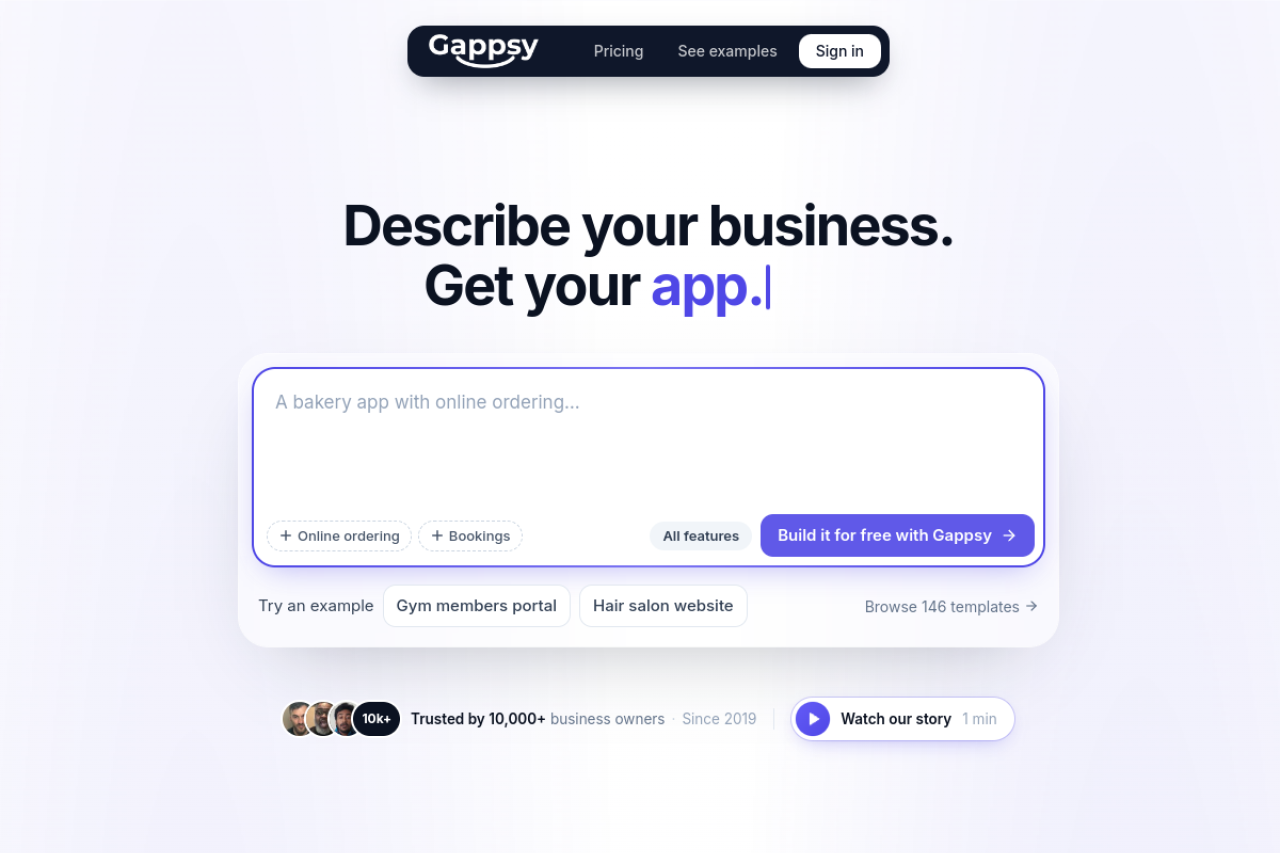
Independent software directory with 7,000+ profiles, side-by-side comparisons and category guides, plus an AI app builder.
2. G2 – Best for verified B2B user reviews
G2 is one of the best-known B2B software review marketplaces. Profiles typically include an overview, features, screenshots, pricing, integrations and verified customer reviews. In January 2026 G2 announced it had agreed to acquire Capterra, Software Advice and GetApp from Gartner; a June 2026 G2 post refers to the three as G2 Digital Markets. G2 says the combined network reaches more than 200 million software buyers a year and holds nearly 6 million verified reviews.
For buyers, G2's value is volume and verification. Established categories have enough reviews to filter by company size; young and niche products often have few.
For vendors, G2 says every company can claim and maintain a free profile. Paid plans now have public entry pricing: Starter is $299 a month without a contract, or $2,999 a year, for new vendors, while Professional and Enterprise (buyer intent data, advertising, verified leads and review generation) go through sales. A profile with no reviews does little.
Pros
• Large base of verified B2B reviews
• Free, editable vendor profile
• Buyer intent data now covers four marketplaces
Cons
• Thin coverage for new or niche products
• Higher plans are quote-based; Starter from $299 a month
• Requires ongoing review collection to pay off
Best for: Mid-market and enterprise buyers who want peer reviews, and B2B vendors ready to run a review program.
3. Capterra – Best for small-business category shortlists
Capterra is a long-running review and comparison site with a small-business focus. Buyers browse by category, filter by features and pricing, and read user reviews. It was part of Gartner Digital Markets for years and, per G2's announcements, is now part of the G2 group.
For buyers, Capterra is good at turning a vague need, such as "field service software", into a realistic list of candidates with reviews. It says it lists all providers, not only those that pay, but sponsored vendors can appear first with a "Visit Website" button.
For vendors, Capterra says a product profile is free and lets you collect verified reviews. Its vendor terms describe pay-per-click and pay-per-lead services, and its guides describe bidding by software category rather than keyword. Current bid levels are not on a public price page.
Pros
• Free profile with review collection
• Strong small-business and vertical coverage
• Pay-per-click lets you control spend
Cons
• Sponsored listings can sit at the top
• Click costs aren't published
• Less useful for developer tools and very new products
Best for: Small businesses building a first shortlist, and SMB-focused vendors who can manage a pay-per-click budget.
4. GetApp – Best for quick filtered shortlists for small teams
GetApp is a sister site to Capterra and Software Advice, now part of the G2 group according to G2. It lists software by category with user reviews and leans on sorting and filtering. GetApp says it covers more than 40,000 software providers and that human moderators verify reviewers are real people.
For buyers, it works much like Capterra with a different presentation, so expect overlap in products and often in review data.
For vendors, GetApp says a product profile is free. Providers pay for sponsored profiles, which show a link-out icon and may appear first, and GetApp may earn a referral fee when visitors click through. Sponsored-profile pricing is not public.
Pros
• Free profile
• Large catalog with moderated reviews
• Simple filters for small teams
Cons
• Heavy overlap with Capterra and Software Advice
• Sponsored profiles may appear first
• No public pricing for paid placement
Best for: Small teams that want a fast shortlist, and vendors already advertising on Capterra who want wider coverage.
5. Software Advice – Best for buyers who want a free advisor
Software Advice, the third former Gartner Digital Markets site, adds something the others don't: free one-on-one guidance from software advisors. You describe your needs, an advisor suggests a short list of vendors (Software Advice mentions up to five) and can connect you for demos.
For buyers, this suits anyone short on research time. Software Advice states the model openly: the service is free because vendors pay it for referrals. Recommendations come from vendors in its program.
For vendors, Software Advice says it lists all providers and that reviews go through the same quality process regardless of payment. The paid side is sponsored profiles and advisor referrals. Referral pricing is not published.
Pros
• Free advisor help for buyers
• Phone-qualified referrals for vendors
• Stated review policy independent of payment
Cons
• Advisor shortlists come from paying vendors
• Overlaps with Capterra and GetApp
• No public referral pricing
Best for: Busy buyers who would rather talk than research, and vendors with a sales team that follows up quickly.
6. TrustRadius – Best for in-depth reviews on larger purchases
TrustRadius is a B2B review site known for long, detailed reviews from verified users. Its trScore is a weighted average rather than a simple mean. HG Insights, a go-to-market data company, announced in 2025 that it had acquired TrustRadius.
For buyers, it is strongest on larger, technical purchases. Review counts are often lower than on G2, but reviews tend to be more substantive.
For vendors, TrustRadius says all vendors can be listed for free and that vendors can't pay for placement or change their scores. It collects reviews through verified outreach, for example around renewals. Paid programs, now sold as HG Insights' Customer Voice, add review generation, intent data and tracking of how AI answer engines describe your product. Pricing is through sales.
Pros
• Detailed reviews suited to larger purchases
• Stated policy that rank and scores can't be bought
• Free vendor listing
Cons
• Fewer reviews than G2 in many categories
• Quote-based, enterprise-oriented paid programs
• Less relevant for consumer apps
Best for: Enterprise and mid-market buyers doing due diligence, and vendors selling higher-priced B2B software.
7. AlternativeTo – Best for crowdsourced alternatives to everyday apps
AlternativeTo is the closest match to SaaSHub's core idea: search for an app and see what people recommend instead. The difference is the source. AlternativeTo says its app pages and recommendations come from people who use the software, not from the site or software companies. It is run by 27 Kilobyte AB in Stockholm, Sweden.
For buyers, it shines for desktop, mobile and consumer software and open-source options, with filters for platform and license (free, freemium, open source, commercial). It is thin on the pricing detail and business reviews that B2B purchases need.
For vendors, signed-in users can suggest a new app, which enters a review queue. Because rankings come from community likes, you can't buy a higher spot. Advertising exists but details aren't published; you contact them.
Pros
• Community recommendations, not paid ranking
• Strong for consumer, mobile and open-source software
• Free to submit an app
Cons
• Little pricing detail or B2B review depth
• Visibility builds slowly through community likes
• Advertising options aren't public
Best for: People replacing a familiar app, and makers of consumer, desktop or mobile software.
8. Product Hunt – Best for launch-day visibility
Product Hunt is a daily leaderboard of new tech products. Makers post a launch, the community upvotes and comments, and well-received products get extra attention.
For buyers, it is a good source of new tools, often with founders answering questions in the comments. Upvotes measure launch-day interest, not long-term quality.
For founders, launching is free. You need a personal account, new accounts need posting access, and Product Hunt's team decides which launches are featured on the homepage; its guidelines exclude directories, templates, services, courses and several other formats. Ads aren't allowed during your launch. Its help center lists self-serve display campaigns with budgets of $5,000 to $10,000, managed campaigns, and Promoted Products, which aren't available for brand-new launches.
Pros
• Free to launch
• Concentrated early-adopter attention
• Direct feedback in comments
Cons
• Attention is mostly a one-day spike
• Homepage featuring is editorial
• Ads need a sizable budget
Best for: Founders launching a new product or major update, and buyers who want to see what's new.
9. There's An AI For That – Best for AI tools
There's An AI For That (TAAFT) is a directory of AI tools organized by task. Its About page says it maps more than 50,000 AI tools to more than 11,000 tasks, launched in December 2022, and is run by There's An AI For That SRL in Bucharest, Romania.
For buyers, it is the fastest way to survey the tools for a specific AI task. Use it for discovery, then compare finalists elsewhere.
For founders, makers can claim and update an existing listing for free. Launching a new tool is paid, with a one-time fee refunded if the tool isn't published, and staff review every submission. Indie makers can enter a monthly thread on X where one tool gets a free listing. TAAFT's pages show more than one launch price, so confirm the fee on its launch form.
Pros
• Large AI-specific catalog organized by task
• Human review of submissions
• Free claiming of existing listings
Cons
• Only covers AI tools
• New launches are paid
• Better for discovery than in-depth evaluation
Best for: Anyone looking for an AI tool for a specific task, and AI startups that want a listing in a dedicated AI directory.
SaaSHub alternatives compared
This table summarizes what each site publishes and how listing works, based on each site's own public pages as of November 2026. Prices are only shown where the site publishes them.
| Site | Best for | Main content | Free listing | Paid options |
|---|---|---|---|---|
| Gappsy | Comparison pages, detailed profiles | Editorial profiles, side-by-side comparisons, category guides | Basic listing free with badge; verified listing or claim $49 one-time | Featured subscriptions; Sponsored mentions from $75, comparison pages from $99, articles from $199 |
| SaaSHub | Alternatives lists | Alternatives built from web mentions and votes, comparisons, startup directory | Yes | Featured listing $99/month |
| G2 | Verified B2B reviews | User reviews, category pages, comparisons | Yes (free profile) | Buyer intent, advertising, verified leads, review services (quote-based) |
| Capterra | SMB category shortlists | User reviews, category lists | Yes | Pay-per-click, pay-per-lead (pricing not public) |
| GetApp | Filtered shortlists for small teams | User reviews, filtered category lists | Yes | Sponsored profiles (pricing not public) |
| Software Advice | Advisor-guided shortlists | Reviews, free advisor consultations | Yes | Sponsored profiles, paid referrals (pricing not public) |
| TrustRadius | In-depth enterprise reviews | Long-form verified reviews, trScore | Yes | Customer Voice programs via HG Insights (quote-based) |
| AlternativeTo | Crowdsourced alternatives | Community-suggested alternatives | Yes (community submission) | Advertising on request (details not public) |
| Product Hunt | Launch-day visibility | Daily launches, upvotes, comments | Yes (free launch) | Display ads ($5,000–$10,000 self-serve budgets), managed campaigns, Promoted Products |
| There's An AI For That | AI tools | AI tools indexed by task | Claiming existing listings is free; new launches are paid | One-time launch fees, sponsorships, pay-per-click |
Ownership: G2 announced its acquisition of Capterra, Software Advice and GetApp from Gartner in January 2026; HG Insights announced its acquisition of TrustRadius in 2025.
Which one should you list your SaaS on?
You don't need to be everywhere. A few well-maintained profiles beat twenty half-finished ones.
1. Claim the free profiles first. G2, Capterra (which also covers GetApp and Software Advice), SaaSHub and AlternativeTo accept products for free. Add pricing, screenshots and a plain description of who the product is for. These pages often rank for your brand name.
2. Get compared with your competitors. Buyers late in a decision search for "X vs Y". If you are an alternative to a better-known tool, a detailed profile plus comparison pages does more than a generic listing. On Gappsy you can list your product and appear in comparisons like Lovable vs Replit.
3. Collect reviews where your buyers read them. For mid-market and enterprise sales, a few dozen verified reviews on G2 or TrustRadius usually matter more than any paid placement.
4. Use launch sites for a spike, not a strategy. One well-prepared Product Hunt launch, repeated for major releases, brings feedback and early users. Then move that attention into durable profiles.
5. Match niche directories to your audience. AI products belong on There's An AI For That, consumer and desktop apps on AlternativeTo, and vertical software (dental, construction, church management) on Capterra and Software Advice.
6. Pay only after the free version works. Paid options range from SaaSHub's $99 monthly Featured listing and G2's Starter plan ($299 a month, or $2,999 a year, for new vendors) to Capterra's pay-per-click and quote-based programs at TrustRadius. Confirm your free profile gets impressions first, then measure the signups each paid placement brings.
Frequently Asked Questions
What is the best alternative to SaaSHub?
It depends on the job. For verified user reviews, use G2, Capterra or TrustRadius. For crowdsourced alternatives to everyday apps, AlternativeTo is closest to SaaSHub's format. For side-by-side comparison pages, Gappsy (our own directory) is built for that. For AI tools, use There's An AI For That.
What sites are like SaaSHub?
AlternativeTo, which also organizes software around alternatives, and Gappsy, which pairs software profiles with comparison pages, are the most similar. G2, Capterra, GetApp, Software Advice and TrustRadius cover the same products but are built on user reviews.
Is it free to list my SaaS on G2 and Capterra?
Yes. G2 says every company can claim and maintain a free profile, and Capterra says creating a product profile is free. Both charge for extra visibility and leads: G2 through vendor plans starting with Starter at $299 a month (Professional and Enterprise are quote-based), Capterra through pay-per-click and pay-per-lead.
Who owns Capterra, GetApp and Software Advice?
They were part of Gartner Digital Markets for years. In January 2026 G2 announced it had agreed to acquire all three from Gartner, and G2 now refers to them as G2 Digital Markets.
How much does a SaaSHub featured listing cost?
SaaSHub lists its Featured listing at $99 per month, cancellable at any time. Submitting and verifying a product is free.
Where should I list a new SaaS product first?
Start with free profiles on G2, Capterra, SaaSHub and AlternativeTo, add comparison pages against your main competitors, and plan one well-prepared Product Hunt launch. AI tools should add There's An AI For That. Pay for placement only once you can measure what the free profiles bring in.
Are software review sites unbiased?
Most are funded by vendors, so read their disclosures. Capterra, GetApp and Software Advice say they list all providers but let sponsored vendors appear first. TrustRadius says rank and scores can't be bought. SaaSHub shows paid products only in labeled promo spots. On Gappsy, paid placements are labeled Sponsored.
What is the difference between a software directory and a review site?
A directory describes products, often with categories, alternatives and comparisons written by the site or vendor. A review site centers on ratings and reviews from users, often verified.