PandaDoc vs PlanetScale vs Port: Which Is Right for You in 2026?
These three don't compete for the same budget line — PandaDoc lives in the sales/ops stack, PlanetScale in the data-infrastructure stack, and Port in the…
Freemium · From Free (paid plans from $19/month per seat)
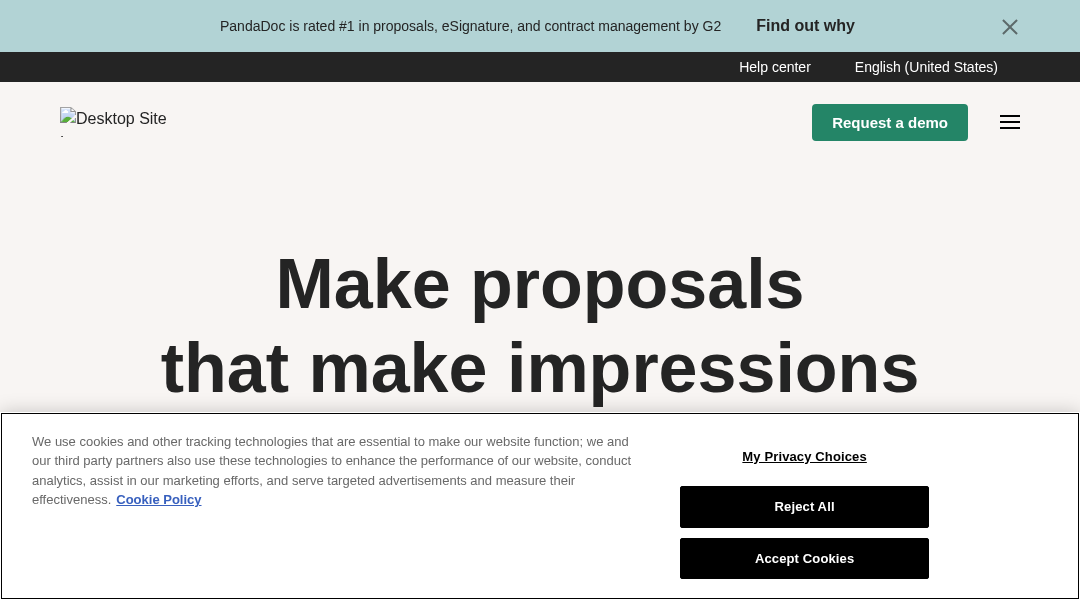
Best for: Sales, HR, or legal teams sending proposals, quotes, and contracts who want e-signature plus built-in CRM and payment integrations rather than a bare signature tool.
Subscription · From From $5/month (Postgres non-HA); Vitess plans from $39/month
Best for: Teams that want Vitess-based horizontally scalable MySQL or managed Postgres with Git-style database branching, from the team that originally built Vitess.
Freemium · From Free (paid plans from $30/seat/month)
Best for: Platform engineering teams that want a self-service developer portal — software catalog, scorecards, governance workflows — built around automation rather than a static catalog.
At a Glance
| PandaDoc | PlanetScale | Port | |
|---|---|---|---|
| Primary category | Developer Tools | Developer Tools | Developer Tools |
| Rating | Not documented | Not documented | Not documented |
| Pricing model | Freemium | Subscription | Freemium |
| Starting price | Free (paid plans from $19/month per seat) | From $5/month (Postgres non-HA); Vitess plans from $39/month | Free (paid plans from $30/seat/month) |
| Free plan | Yes | Not documented | Yes |
| Free trial | Not documented | Not documented | Not documented |
| Platforms | Not documented | Web | Not documented |
| Team collaboration | Not documented | Not documented | Not documented |
| AI features | Not documented | Not documented | Yes |
| Public API | Not documented | Yes | Yes |
Standout Differences
Three unrelated budget lines
PandaDoc is bought by sales/HR/legal ops, PlanetScale by engineering for data infrastructure, and Port by platform engineering for developer experience and governance. There's no real feature overlap between any pair of the three.
PandaDoc, PlanetScale, Port
PandaDoc's overage fees reward predictable volume
Both PandaDoc's Starter and Business plans charge per-document overage fees once you exceed plan allowances ($3.50 or $2 on Starter depending on billing cycle, $2.60 on Business monthly), and Enterprise customers can choose per-seat or per-document pricing with unlimited seats — a flexibility that matters if document volume is uneven across a team.
PandaDoc
PlanetScale skips the free tier entirely
Unlike PandaDoc and Port, PlanetScale has no free plan documented — pricing starts at $5/month for non-HA Postgres and $39/month for its original Vitess-based MySQL plans, positioning it as a paid-from-day-one infrastructure purchase.
PlanetScale
Port's entry price undercuts typical IDP tooling
Port offers a free plan before paid tiers starting at $30/seat/month, giving platform teams a way to pilot a software catalog and self-service workflows before committing budget.
Port
Feature-by-Feature
Pricing & Plans
| Feature | PandaDoc | PlanetScale | Port |
|---|---|---|---|
| Free plan available | Available | Unavailable | Available |
| Per-seat pricing | Available | Not documented | Available |
| Usage-based overage fees | Available | Not documented | Not documented |
| Enterprise custom pricing option | Available | Not documented | Not documented |
Core Capabilities
| Feature | PandaDoc | PlanetScale | Port |
|---|---|---|---|
| Document creation & e-signature | Available | Unavailable | Unavailable |
| Built-in CRM/payment integrations | Available | Unavailable | Unavailable |
| Managed relational database (MySQL/Postgres) | Unavailable | Available | Unavailable |
| Git-style database branching | Unavailable | Available | Unavailable |
| Software catalog & scorecards | Unavailable | Unavailable | Available |
| Self-service infrastructure workflows | Unavailable | Unavailable | Available |
Pricing Compared
Starting price reflects the lowest paid tier, not the full cost for every team size or usage level.
PandaDoc
PlanetScale
Port
Pros & Cons
PandaDoc
Pros
- All-in-one document creation, signing and payment collection reduces tool sprawl
- Deep CRM integrations streamline sales workflows
- Real-time tracking shows exactly how recipients engage with documents
- Free plan and relatively affordable Starter tier for small teams
- Large template and content library speeds up proposal creation
Cons
- Per-seat pricing can get expensive for larger sales teams
- Advanced features like CPQ and SSO require custom Enterprise pricing
- Document limits on the Free plan (60/year) are restrictive for active use
- Learning curve for building complex conditional workflows
- Some users report formatting quirks when importing from Word or PDF
PlanetScale
Pros
- Built by the original creators of Vitess, with deep expertise in scaling relational databases
- Git-style branching and non-blocking schema changes reduce migration risk
- Proven at massive scale, with Vitess powering Slack, GitHub, Block and Bloomberg
- Strong compliance posture, including SOC 2, HIPAA and PCI DSS, suits regulated industries
- Now offers both Vitess/MySQL and native Postgres products
Cons
- No free tier since the Hobby plan was discontinued in April 2024, raising the barrier for side projects and small apps
- Pricing can scale quickly for high-availability, multi-region deployments
- Shift toward enterprise focus may be less attractive to solo developers and small teams
- Vitess sharding model adds architectural complexity compared to a plain managed database
Port
Pros
- Fully managed SaaS alternative to self-hosting and maintaining an open-source portal like Backstage
- Highly customizable data model for software catalogs and self-service actions
- Free tier available for small teams to evaluate the platform
- Scorecards and governance tools help enforce standards at scale
- Backed by substantial venture funding, supporting continued product investment
Cons
- Per-seat pricing can become expensive for larger engineering organizations
- Initial catalog setup and data modeling require upfront engineering effort
- Enterprise-grade features like SSO and advanced security are gated behind higher tiers
- Smaller ecosystem of community plugins compared to the open-source Backstage project
- Overkill for very small engineering teams without complex service sprawl
Use Cases
PandaDoc
- Sales proposal and quote automation — Build, send and track proposals and quotes tied directly to CRM deal records.
- Contract and HR document e-signature — Route offer letters, NDAs and vendor contracts for compliant electronic signature.
- Agency client onboarding — Manage proposals, contracts and payment collection in shared deal rooms with clients.
PlanetScale
- Scaling MySQL at high traffic volume — Engineering teams migrate to PlanetScale's Vitess-based sharding to scale MySQL-compatible workloads beyond a single database instance.
- Safe schema migrations via branching — Development teams use database branches to test and review schema changes before merging into production, similar to a Git workflow.
- Regulated, compliance-sensitive workloads — Companies in healthcare, finance and other regulated industries run PlanetScale for its SOC 2, HIPAA and PCI DSS compliance.
Port
- Standardizing a fragmented microservices landscape — Platform engineering teams use Port to build a unified catalog of services and ownership data across a fragmented microservices architecture.
- Self-service infrastructure provisioning — DevOps teams use Port's self-service actions to let developers provision infrastructure or trigger deployments without manual tickets.
- Governance and compliance enforcement — Engineering leadership uses Port's scorecards to track and enforce security, reliability, and production-readiness standards across services.
Screenshots
PandaDoc
Frequently Asked Questions
Do PandaDoc, PlanetScale, and Port serve the same purpose?
No. PandaDoc automates document creation, e-signature, and contract workflows for sales, HR, and legal teams; PlanetScale is a managed MySQL/Postgres database platform for engineering teams; Port is an internal developer portal for platform engineering. They address entirely different jobs and are typically bought by different teams.
Which of the three is cheapest to start using?
PandaDoc and Port both have free plans — PandaDoc capped at 60 documents/year, Port with a free seat tier before paid plans start at $30/seat/month. PlanetScale has no documented free tier and starts paid immediately at $5/month for non-HA Postgres.
Is PlanetScale only for MySQL?
No. PlanetScale now offers both managed Postgres (from $5/month, non-HA) and its original Vitess-based horizontally scalable MySQL (plans from $39/month), plus Git-style branching across both.
Does PandaDoc replace a dedicated e-signature tool?
For teams whose main need is proposals, quotes, and contracts, PandaDoc bundles e-signature with document templates and built-in CRM and payment integrations, positioning it as a fuller document workflow platform rather than signature-only software.
Which team in an organization would typically own each tool?
Sales operations or legal typically owns PandaDoc for proposals and contracts, the infrastructure/backend engineering team owns PlanetScale for database provisioning, and the platform engineering team owns Port for the internal developer portal and service catalog.
Does Port store or host application data like PlanetScale does?
No. PlanetScale is the database — it manages and hosts your MySQL or Postgres data. Port catalogs the services running against that database and can trigger self-service infrastructure actions, but it is not a data store itself.
Read the full PandaDoc review · Read the full PlanetScale review · Read the full Port review