Python Environments vs QuickBooks vs Segment: Which Is Right for You in 2026?
This is about as far apart as three tools get: Python Environments is a free, narrowly scoped VS Code extension for managing local Python environments;…
Free - distributed as a free extension on the Visual Studio Code Marketplace · From Free
Best for: Any Python developer working in VS Code who currently juggles multiple environment managers (venv, conda, uv, pyenv, poetry, pipenv) and wants them unified in one interface, at zero cost.
Annual desktop software subscriptions sold per license/user for QuickBooks Desktop products (Pro Plus, Premier Plus, Enterprise), separate from Intuit's cloud QuickBooks Online and QuickBooks Time monthly subscriptions. · From From approximately 1,149 US dollars per year for QuickBooks Desktop Pro Plus (single user, as of February 2026 pricing)
Best for: Small and midsize businesses that need bookkeeping, invoicing, and financial reporting, and want a tool most bookkeepers and accountants already know how to use.
Freemium, usage-based on Monthly Tracked Users (MTUs) with custom enterprise pricing · From Free for up to 1,000 MTUs per month; Team plan starts at $120 per month for up to 10,000 MTUs
Best for: Companies with enough tracked users and downstream marketing, analytics, or warehouse tools to justify a dedicated customer data platform, typically mid-market and up.
At a Glance
| Python Environments | QuickBooks | Segment | |
|---|---|---|---|
| Primary category | Developer Tools | Developer Tools | Developer Tools |
| Rating | Not documented | Not documented | Not documented |
| Pricing model | Free - distributed as a free extension on the Visual Studio Code Marketplace | Annual desktop software subscriptions sold per license/user for QuickBooks Desktop products (Pro Plus, Premier Plus, Enterprise), separate from Intuit's cloud QuickBooks Online and QuickBooks Time monthly subscriptions. | Freemium, usage-based on Monthly Tracked Users (MTUs) with custom enterprise pricing |
| Starting price | Free | From approximately 1,149 US dollars per year for QuickBooks Desktop Pro Plus (single user, as of February 2026 pricing) | Free for up to 1,000 MTUs per month; Team plan starts at $120 per month for up to 10,000 MTUs |
| Free plan | Yes | Not documented | Not documented |
| Free trial | Not documented | Not documented | Not documented |
| Platforms | Not documented | Not documented | Not documented |
| Team collaboration | Not documented | Not documented | Not documented |
| AI features | Not documented | Not documented | Not documented |
| Public API | Not documented | Not documented | Not documented |
Standout Differences
No real category overlap
This trio spans developer tooling, business accounting software, and customer data infrastructure — three separate buying decisions made by three separate roles (a developer, a bookkeeper or finance lead, and a data/growth team) inside the same company.
Python Environments, QuickBooks, Segment
Python Environments is free, full stop
As an official Microsoft extension distributed on the VS Code Marketplace, Python Environments has no pricing tiers, no trial, and no upsell — it's simply free for any VS Code user managing Python environments and packages.
Python Environments
QuickBooks separates payroll from the core subscription
Payroll is typically sold as a separate add-on rather than bundled into the base QuickBooks accounting subscription, which matters for total cost planning if a business intends to run payroll through QuickBooks directly rather than another provider.
QuickBooks
Segment's pricing is a funnel toward a sales conversation
Segment is free up to 1,000 monthly tracked users and has a published Team plan at $120/month for up to 10,000 MTUs, but its full Customer Data Platform (Connections, Unify, and Engage bundled) and higher volumes are quoted through custom sales pricing — a 14-day free trial on core Connections is the main self-serve evaluation path.
Segment
Feature-by-Feature
Pricing & Plans
| Feature | Python Environments | QuickBooks | Segment |
|---|---|---|---|
| Free to use | Available | Unavailable | Available |
| Published self-serve pricing | Available | Available | Limited |
| Custom/enterprise sales pricing | Unavailable | Not documented | Available |
| Free trial on a paid tier | Not documented | Not documented | Available |
Core Function
| Feature | Python Environments | QuickBooks | Segment |
|---|---|---|---|
| Local Python environment/package management | Available | Unavailable | Unavailable |
| Accounting, invoicing, and bookkeeping | Unavailable | Available | Unavailable |
| Payroll | Unavailable | Limited | Unavailable |
| Customer data collection and routing to downstream destinations | Unavailable | Unavailable | Available |
Pricing Compared
Starting price reflects the lowest paid tier, not the full cost for every team size or usage level.
Python Environments
QuickBooks
Segment
Pros & Cons
Python Environments
Pros
- Completely free official Microsoft extension with no paid tiers
- Supports all major Python environment managers in one unified UI
- Quick Create simplifies environment setup from dependency files
- Multi-project support is genuinely useful for monorepos and microservices
- Portable settings.json configuration avoids machine-specific breakage
- Actively developed in the open on GitHub with regular Microsoft blog updates
Cons
- Was still in preview with evolving APIs for roughly a year before general availability
- Requires users to opt in or wait for gradual rollout via the python.useEnvsExtension setting
- Adds another extension and view to learn on top of the existing Python extension
- Some legacy workflows built around the original Python extension's interpreter picker may need adjustment
- Multi-project configuration adds complexity for simple single-environment projects
- Tied specifically to the VS Code ecosystem, not usable in other editors
QuickBooks
Pros
- Deep, mature feature set trusted by accountants and bookkeepers for decades
- Industry-specific Enterprise editions for construction, manufacturing, retail, and nonprofits
- Strong reporting depth compared to many lighter-weight accounting tools
- Large ecosystem of certified ProAdvisors and third-party integrations
- Locally installed application appeals to businesses wanting data control outside a browser
- Multi-user network hosting supports in-office collaborative bookkeeping
Cons
- Pro Plus and Premier Plus are no longer sold to new customers as of October 2024
- Desktop pricing has risen sharply, with Pro Plus jumping to 1,149 US dollars per year in February 2026
- Only QuickBooks Enterprise remains available for new purchases, at a much higher price point
- Intuit's active development focus has shifted to QuickBooks Online, not Desktop
- Older Desktop versions lose support on a rolling schedule, requiring periodic paid upgrades
- Multi-user and per-employee payroll fees can add significant cost for growing teams
Segment
Pros
- Very large catalog of pre-built destination integrations reduces custom engineering work
- Free tier makes it accessible for small projects and early-stage startups
- Identity resolution (Unify) provides a genuinely unified customer profile across devices
- Backed by Twilio's infrastructure and enterprise support resources
- Strong data governance tooling (Protocols, Privacy Portal) for regulated industries
Cons
- Business tier pricing is not published and requires a sales conversation, making budgeting harder
- MTU-based pricing can scale quickly and unpredictably as a company's user base grows
- Free and Team tiers lack advanced governance and identity resolution features
- Enterprise contracts can run into six figures annually for larger MTU volumes
- Some advanced AI and audience features are reserved for the highest tier only
Use Cases
Python Environments
- Multi-environment-manager teams — Development teams where different developers prefer conda, uv, poetry, or venv can standardize on one VS Code interface regardless of individual tool preference.
- Monorepo and microservices development — Engineers working across multiple Python services in one repository assign distinct environments per folder instead of managing one shared interpreter.
- Fast project bootstrapping — Developers starting new Python projects use Quick Create to spin up an environment and install dependencies from an existing requirements.txt or pyproject.toml in one step.
QuickBooks
- Established small businesses with existing desktop workflows — Businesses already running their bookkeeping on QuickBooks Desktop continue using Pro Plus, Premier Plus, or Enterprise rather than migrating workflows to a browser-based tool.
- Industry-specific accounting needs — Businesses in construction, manufacturing, retail, or nonprofit sectors use QuickBooks Enterprise's industry-specific editions for specialized reporting and workflows.
- Accounting firms managing legacy desktop clients — Bookkeeping and accounting firms maintain QuickBooks Desktop expertise to support existing clients still running Pro Plus or Premier Plus company files.
Segment
- Unified analytics instrumentation — An engineering team uses Segment to instrument event tracking once across web and mobile apps and route that data to multiple analytics tools without writing separate integrations.
- Marketing audience building — A marketing team uses Segment's Unify and Twilio Engage features to build unified customer profiles and launch targeted multi-channel campaigns.
- Data warehouse synchronization — A data team uses Segment's Reverse ETL to sync curated customer data from their warehouse back into CRM and support tools used by frontline teams.
Screenshots
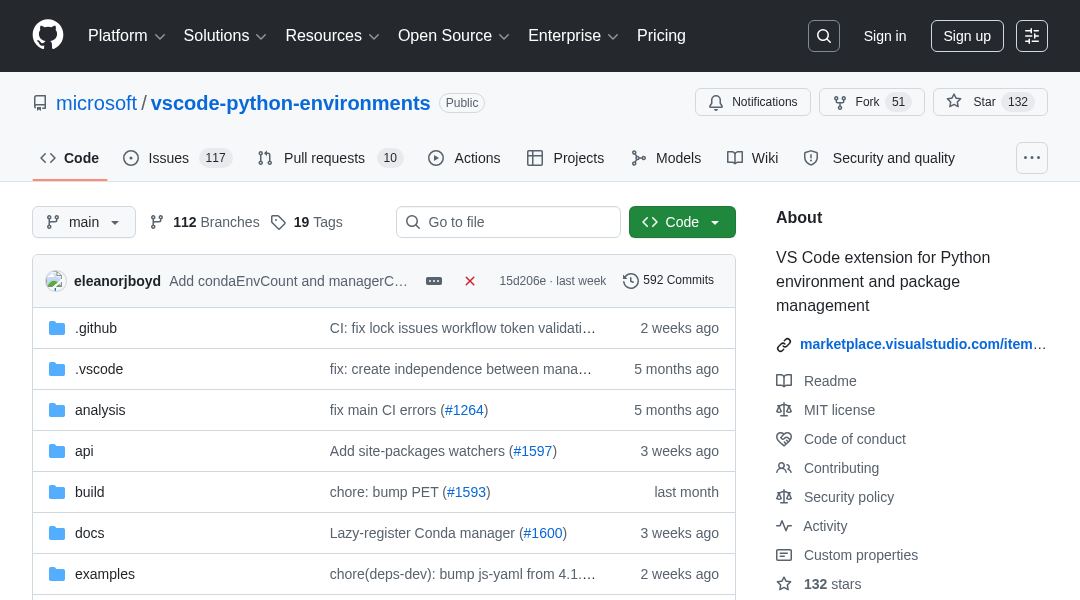
Python Environments
QuickBooks
Segment
Frequently Asked Questions
Why are Python Environments, QuickBooks, and Segment grouped together?
They aren't substitutes for one another — each is a category leader in a completely different area (local dev tooling, business accounting, and customer data infrastructure). Buyers researching 'developer and business tools' may encounter all three, but for entirely unrelated needs inside a company.
Is Python Environments really free?
Yes. It's an official Microsoft VS Code extension distributed for free on the VS Code Marketplace, with no paid tiers or upgrade path.
Does QuickBooks include payroll?
Not by default. Payroll is typically sold as a separate add-on to the base QuickBooks accounting subscription, so businesses planning to run payroll through QuickBooks should factor that additional cost in separately from the base license price.
How much does Segment cost for a small startup?
Segment is free for up to 1,000 monthly tracked users (MTUs), and its Team plan starts at $120/month for up to 10,000 MTUs. Beyond that, or for the full Customer Data Platform bundle (Connections, Unify, and Engage), pricing moves to a custom sales quote based on volume.
Which of the three most directly affects a company's finances and requires accountant input?
QuickBooks, since it's the accounting and bookkeeping system of record — invoicing, expense tracking, bank reconciliation, and financial reporting all run through it, and most small-business accountants and bookkeepers are already familiar with it.
Can Segment send customer data into QuickBooks?
Segment's own description mentions routing data to more than 700 destination apps spanning analytics, marketing, and data warehouse tools, but our data doesn't confirm whether QuickBooks specifically is among Segment's destinations — check Segment's destination catalog directly before assuming compatibility.
Read the full Python Environments review · Read the full QuickBooks review · Read the full Segment review