Demandbase vs Dynamic Yield vs Écentic: Which Is Right for You in 2026?
These three occupy separate corners of 'marketing' and rarely get evaluated against each other in a real buying process. Demandbase is a B2B account-based…
Contact for pricing · From Custom pricing
Best for: B2B teams that need to identify target accounts and coordinate multi-channel outreach as part of an ABM strategy.
Contact for pricing · From Custom enterprise pricing (third-party estimates cite entry contracts around $35,000/year)
Best for: Enterprise brands running personalization and experimentation programs across web, app, and email, especially those already tied to the Mastercard ecosystem.
Freemium · From Free
Best for: Ecommerce brands trying to win recommendations from AI shopping agents at a low-risk, usage-based price point.
At a Glance
| Demandbase | Dynamic Yield | écentic | |
|---|---|---|---|
| Primary category | Marketing | Marketing | Marketing |
| Rating | Not documented | Not documented | Not documented |
| Pricing model | Contact for pricing | Contact for pricing | Freemium |
| Starting price | Custom pricing | Custom enterprise pricing (third-party estimates cite entry contracts around $35,000/year) | Free |
| Free plan | Not documented | Not documented | Yes |
| Free trial | Not documented | Not documented | Not documented |
| Platforms | Web | Web | Web |
| Team collaboration | Not documented | Not documented | Not documented |
| AI features | Yes | Yes | Yes |
| Public API | Yes | Yes | Yes |
Standout Differences
Three disciplines, one category label
Demandbase (ABM/account targeting), Dynamic Yield (personalization/experimentation), and écentic (AI answer-engine optimization for ecommerce) all get filed under 'Marketing' but solve unrelated problems - a B2B software company evaluating Demandbase has essentially no use for écentic, and vice versa for a DTC ecommerce brand.
Demandbase, Dynamic Yield, écentic
écentic is the only one built for the AI-agent era
écentic's entire premise is simulating how AI shopping agents evaluate products and rewriting listings to win more agent-driven purchases - a job that didn't exist when Demandbase and Dynamic Yield's category was defined, and one neither platform is positioned to do.
écentic
Pricing philosophy splits sharply
Demandbase and Dynamic Yield are both contact-for-pricing enterprise platforms (Dynamic Yield's entry contracts are estimated by third parties around $35,000/year), while écentic is freemium and usage-based - its Pay-as-you-go tier costs nothing until an AI agent actually drives a sale.
Demandbase, Dynamic Yield, écentic
Dynamic Yield's ownership matters for enterprise buyers
Dynamic Yield is owned by Mastercard, a distinguishing factor for enterprise brands weighing data-partnership and payments-ecosystem implications that don't apply to either Demandbase or écentic.
Dynamic Yield
Feature-by-Feature
Pricing & Plans
| Feature | Demandbase | Dynamic Yield | écentic |
|---|---|---|---|
| Free / pay-as-you-go entry tier | Unavailable | Unavailable | Available |
| Custom enterprise contracts | Available | Available | Not documented |
Core Focus
| Feature | Demandbase | Dynamic Yield | écentic |
|---|---|---|---|
| B2B account identification & ABM outreach | Available | Unavailable | Unavailable |
| On-site/app personalization & A/B testing | Not documented | Available | Unavailable |
| AI shopping-agent / answer-engine optimization | Unavailable | Unavailable | Available |
| Native Shopify/WooCommerce install | Not documented | Not documented | Available |
| Competitor benchmarking / battlecards | Not documented | Not documented | Available |
Pricing Compared
Starting price reflects the lowest paid tier, not the full cost for every team size or usage level.
Demandbase
No individual plan breakdown documented yet.
Dynamic Yield
écentic
Pros & Cons
Demandbase
Pros
- One of the longest-established, most recognized names in account-based marketing
- Combines intelligence, advertising, and sales signals in a single platform rather than requiring multiple point tools
- Strong customer base among large, well-known B2B brands
- SOC 2 and ISO 27001 certifications support enterprise security requirements
Cons
- No public pricing; contracts often run into six figures annually
- Considerable ramp-up time and internal alignment needed to get full value from ABM tooling
- Better suited to larger sales teams than small or early-stage B2B companies
- Full capability set requires licensing multiple modules, adding to overall cost
Dynamic Yield
Pros
- Deep, unified feature set spanning testing, targeting, and recommendations under one roof
- Backed by Mastercard's resources and data infrastructure since the 2021 acquisition
- Consistently ranked a Leader in Gartner and Forrester personalization/experience-optimization reports
- Strong fit for complex, multi-channel enterprise personalization programs
- Generative-AI features (Shopping Muse) extend the platform beyond rules-based targeting
Cons
- No published pricing; buyers must go through an enterprise sales cycle to get a quote
- Overkill and cost-prohibitive for small businesses without dedicated personalization staff
- Implementation and configuration require significant technical and analytics resources
- Being part of Mastercard's enterprise portfolio can mean slower, more formal sales and support processes
écentic
Pros
- Free audit lets merchants baseline their AI shopping agent visibility before paying
- Simulates multiple leading AI models rather than testing against just one
- Automated rewriting turns diagnosis directly into optimized listing content
- Native Shopify App Store presence simplifies setup for existing merchants
Cons
- Company founding details, headquarters, and funding are not publicly disclosed
- Mid-tier Compete plan pricing is not publicly published
- Focused primarily on Shopify and WooCommerce, limiting fit for other platforms
- AI shopping agent behavior can change as underlying models are updated, requiring ongoing re-optimization
Use Cases
Demandbase
- Prioritizing sales outreach — Sales teams use account and buying-group intelligence to know which accounts and contacts to focus on first.
- Running targeted ad campaigns — Marketing teams launch advertising aimed only at named target accounts instead of broad demographic targeting.
- Personalizing the website experience — Teams show tailored messaging to visitors from key target accounts to increase engagement and conversion.
- Measuring ABM program ROI — Revenue operations teams track which accounts and programs are actually generating pipeline and closed revenue.
Dynamic Yield
- On-site product recommendations — Retailers use Dynamic Yield's recommendation engine to surface personalized product suggestions that lift average order value.
- Cross-channel journey orchestration — Banks and travel brands sequence web, email, and app messaging around key customer moments like account milestones or trip dates.
- Conversion rate optimization programs — Growth teams run structured A/B and multivariate tests to validate UX and merchandising changes before full rollout.
- Conversational shopping — Shopping Muse lets customers describe needs in natural language and get matched to relevant products.
écentic
- DTC brands optimizing for AI shopping agents — Direct-to-consumer brands use écentic to rewrite product listings so they are more likely to be recommended by AI shopping assistants.
- Shopify merchants diagnosing lost sales — Merchants use the platform to understand why competitors are chosen over them when shoppers use AI agents to compare products.
- Agencies managing AI-visibility strategy — Digital agencies use écentic's per-model reporting and MCP API to manage AI shopping visibility across multiple merchant clients.
Screenshots
écentic
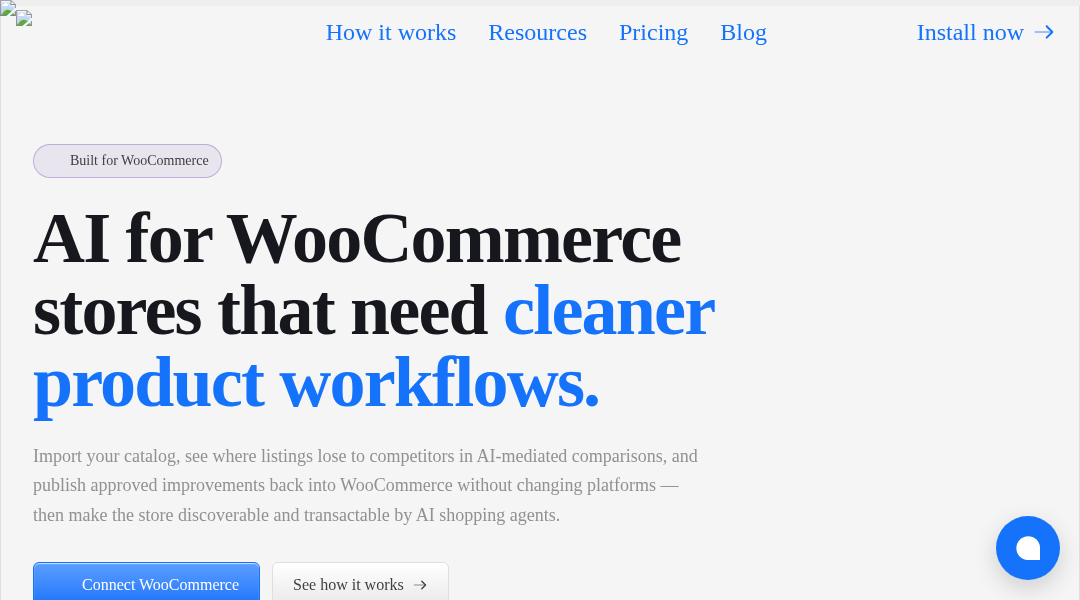
Frequently Asked Questions
Is écentic a replacement for Demandbase or Dynamic Yield?
No. écentic is focused specifically on optimizing ecommerce product listings so AI shopping agents like ChatGPT, Claude, Gemini, and Perplexity recommend them more often - it doesn't do B2B account targeting like Demandbase or on-site personalization/experimentation like Dynamic Yield. A B2B software company or a brand running web personalization tests wouldn't use écentic in place of those tools.
How does écentic's pricing compare to Demandbase and Dynamic Yield?
écentic is dramatically cheaper to start: it's freemium, with a Pay-as-you-go tier that costs nothing until an AI agent actually drives a sale. Demandbase and Dynamic Yield are both custom-quote enterprise platforms; Dynamic Yield's entry contracts are estimated by third parties at around $35,000/year, and neither publishes a self-serve starting price.
Which of these three is built specifically for ecommerce?
écentic is the only one purpose-built for ecommerce - it installs natively on Shopify and WooCommerce and tracks an AI visibility score for product listings. Dynamic Yield supports web/app/email personalization broadly, including retail use cases, but isn't ecommerce-exclusive, and Demandbase is oriented toward B2B account-based marketing rather than product-level ecommerce optimization.
Do Demandbase and Dynamic Yield compete with each other?
Not directly - Demandbase focuses on identifying and coordinating outreach to target B2B accounts (account-based marketing), while Dynamic Yield focuses on personalizing and testing content and recommendations once a visitor is already on your site, app, or email list. A B2B company could plausibly use both: Demandbase to find and target the right accounts, Dynamic Yield to personalize what those visitors see.
Which tool should an ecommerce brand worried about AI shopping agents choose?
écentic, since it's the only one of the three explicitly built to simulate and improve how AI shopping agents like ChatGPT and Perplexity evaluate and recommend products. Neither Demandbase (B2B ABM) nor Dynamic Yield (general personalization/experimentation) is designed around AI-agent shopping behavior.
Read the full Demandbase review · Read the full Dynamic Yield review · Read the full écentic review